The Ledger of Casting: What Magic Should Cost Beyond the Slot

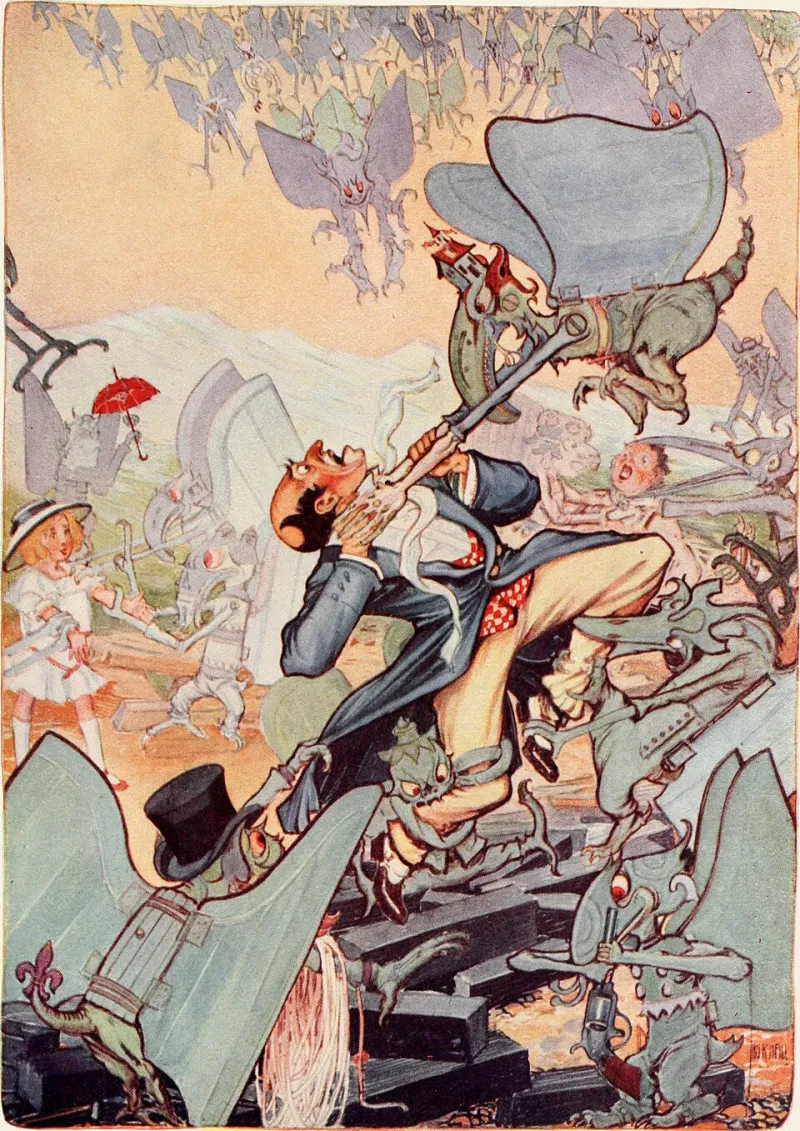
Photo: ChatGPT 4.0, Dall-E 3.0, Public domain, via Wikimedia Commons
I ran a campaign once where the wizard solved everything. Not because the player was a munchkin — she was lovely and engaged and read her spell list like scripture — but because the only thing a spell ever cost her was a slot, and slots come back after eight hours of sleep.
There was no moment where she hesitated. No scene where the party argued about whether the ritual was worth it. Magical solutions arrived with the same moral weight as pulling a rope. And the more I looked at it, the more I thought: this is a design problem wearing a player's face.
A Slot Is a Battery, Not a Story
Resource attrition is a fine engine for a dungeon crawl. It is a terrible engine for wonder. When the entire price of bending reality is a checkmark in a box, the subtext of every spell becomes budget management, and budget management has never once made anybody gasp.
The older stories that fantasy gaming keeps stealing from don't work that way. Merlin is not limited by spell slots. He is limited by obligations, by prophecy, by the fact that he is bound to something that will eventually collect. The magic has a creditor. That is why it feels heavy.
So here is the provocation, delivered plainly: if magic in your game is free apart from a rest, your players will eventually stop treating it as magic.
The Menu
You do not need a new subsystem. You need a list of consequences short enough to remember mid-scene and specific enough to be interesting. Seven that have earned their keep at my tables:
Debt and favors. The spell works. Something noticed. A being of the right order of magnitude now holds a marker on the caster, and it will call it in at a moment of your choosing. This is the single most reusable cost in fantasy gaming, because it is a plot hook disguised as a spell component.
Memory. Small, specific erasures. The caster forgets the name of the village they saved, or the face of the person they were casting to protect. Cheap to adjudicate, devastating in play, and it scales — higher-level magic takes bigger bites.
Reputation. Not a Persuasion penalty slapped on at random, but a visible social consequence. The villagers saw the eyes go black. The temple heard what the ritual required. Word travels and doors close.
Corruption and taint. The classic, from Shadow of the Demon Lord and Symbaroum forward. Keep it mechanical enough to be felt and slow enough to be survivable. A track with five boxes and real effects at three and five beats a table of escalating curses nobody remembers.
Blood and body. Exhaustion, a lasting scar, a temporary sensory loss. Physical costs are honest because everyone understands them instantly and can plan around them.
Time. Every shortcut demands the clock move. The ritual takes an hour the party does not have while something is being carried toward a door somewhere else in the world.
Rarity. The spell consumed something the party cannot easily replace. Not gold — gold is boring. A vial of something from an extinct thing. The last of it.
The Guardrails
Push this too hard and you get players who refuse to cast. The line between weighty and punitive is real, and these are the rules that keep you on the right side of it.
Telegraph, every time. Costs are announced before the choice, not after. A player who learns the price only once the spell has resolved has been punished, not given a decision. Say it out loud at the moment of casting: "You can push for the full effect, and it will cost you the memory of your sister's voice. Still in?"
Offer a choice, not a sentence. Two options with different costs is a decision. One option with a cost is a toll booth. Wherever possible, let the caster take a weaker effect for free or the full effect for a price.
Never brick a character. Costs should bend the character's story, not end their ability to participate. Lost memories create scenes. Lost spellcasting ability creates a player scrolling their phone.
Keep a way down. Corruption tracks, debts, and curses need a path toward resolution — a ritual, a quest, a hard conversation with something older. Permanence without recourse is a wall, and players stop engaging with walls.
Consent at session zero. Say plainly that magic in this game has teeth. Some players came for heroic wish fulfillment and that is a legitimate way to play. Know your table before you change the physics of it.
Escalate, don't repeat. The third time a spell costs a memory, it is a gimmick. The third cost should be a different kind of thing, aimed at what the character actually cares about this season.
Systems That Already Do This
You are not inventing anything. Dungeon Crawl Classics spellburn lets a caster trade physical ability for power and it is one of the most electric mechanics in the hobby. Call of Cthulhu makes magic expensive in ways you feel immediately. Blades in the Dark charges stress for supernatural effects and proves that cost does not have to mean damage. Steal shamelessly and file off the serial numbers.
Try It This Week
Pick one spell at your next session — a divination, a resurrection, a teleport — and attach exactly one announced cost to casting it at full strength. Watch the table react. If your players start negotiating with the universe instead of checking a box, you have found the thing slots were never giving you.
The point is not to make magic scarce. Scarcity is easy and dull. Make it expensive, and your players will finally start treating it like it matters — which is the only way it ever will.