The Tower That Remembers: Building a Living Megadungeon Your Table Can Call Home
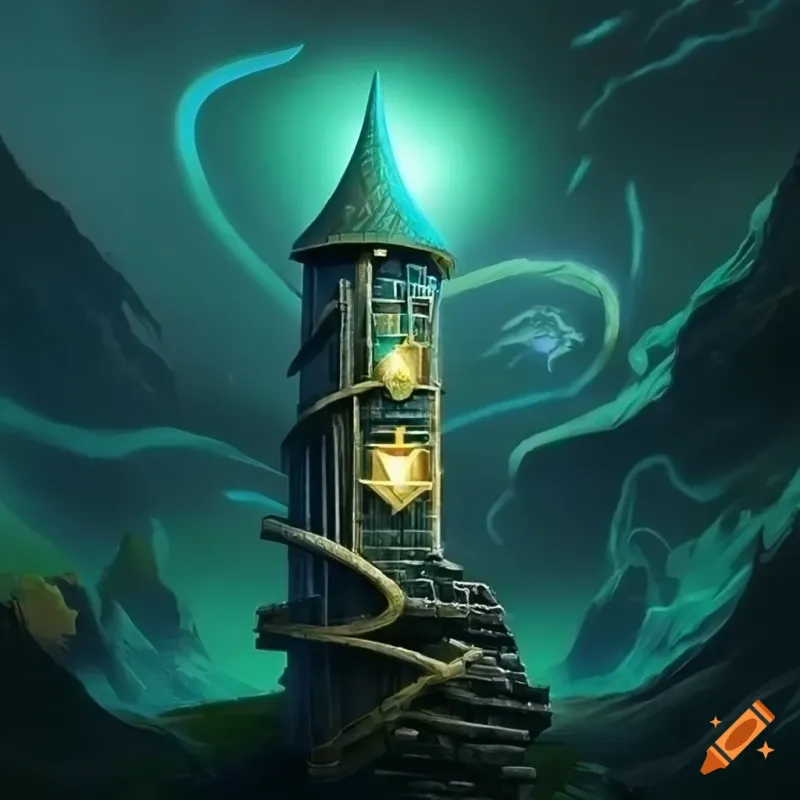
Photo: towering dark fantasy wizard tower night magical glowing windows, via pics.craiyon.com
There's a reason the wizard's tower endures as fantasy's favorite dungeon. It's self-contained, it's vertical (which means easy to map and easy to expand), and it comes with a built-in excuse for anything: magic. A keep like that isn't just a location. Done right, it's the best NPC you'll ever run — because it never dies, never leaves the party, and always has a new floor.
Here's a full framework for building a living megadungeon around your actual gaming group, designed to sustain a campaign for years.
Session Zero: The Tower Rules
Before anyone rolls a character, set expectations. A megadungeon campaign lives or dies on the social contract, so put it plainly:
- The keep is the campaign. Not every session will push a 'plot.' Some sessions are about one hallway. That's the deal.
- The keep changes. Floors shift, rooms rearrange, and nothing the party does is wasted — but nothing is permanent, either.
- Death is real, but the tower isn't fair. It's a puzzle box, not a meat grinder. Retreating is always a valid choice.
One house rule I love for this style: the keep notices the party. First time they clear a floor, name it something in-game — 'the tower has learned your names' — and watch the table get chills. Cheap? Absolutely. Effective? Every time.
The Core Gimmick: A Dungeon With a Memory
The twist that keeps a tower campaign fresh for years: the keep reshapes itself based on party behavior. Not randomly — responsively.
Keep a simple ledger between sessions. Did the party brute-force the last three doors? The next floor grows more locks, more traps, more things that reward subtlety. Did they talk their way past a guardian? The tower starts testing their words — mimics that repeat conversations, portraits that lie. Did they hoard loot? Rooms start offering bargains instead of battles.
You don't need complex systems for this. A sticky note with three observations ('aggressive,' 'curious,' 'protective of each other') is enough. Each new floor is your answer to those observations. The players will start feeling the tower study them, which is exactly the atmosphere you want. It's a dungeon that's also a mirror.
Faction Design: Everyone Lives Here
A megadungeon without factions is a hallway with extra steps. The keep should be inhabited, and its denizens should have competing relationships with the tower itself:
- The Stewards. Constructs, animated servants, or an ancient seneschal who claim to serve the absent archmage. Are they maintaining the keep — or is the keep them? Great slow-burn mystery.
- The Squatters. Goblins, kobolds, a lich's failed apprentices — whoever moved into the lower floors. They know the shortcuts. They want trade, not war. Every good megadungeon needs a friendly faction with terrible taste in real estate.
- The Claimants. Rival adventurers, noble houses, or a rival wizard's expedition who want the keep for themselves. They give you recurring antagonists who can retreat, regroup, and hold grudges across a whole year of play.
- The Warden. One entity — a bound genie, a fragment of the archmage's mind — that is the tower's reshaping instinct. The endgame NPC. The party can befriend it, free it, or fight it, and each choice changes what the tower becomes.
The trick is to give every faction a different theory about the tower, mirroring the party's own. When those theories collide, your plot generates itself.
Pacing for the Long Haul
A tower that runs for years needs rhythm. Three tools that work:
Floor as season. Each floor is a campaign arc — three to eight sessions, with a floor 'boss' that's more likely a negotiation than a fight. Between floors, give the party a breather session in town or in their claimed rooms.
The home floor. Around level 3–4, let the party claim and renovate a floor of their own. This is the single best retention mechanic I've found: players defend invested territory ferociously, and it gives the tower a way to 'talk' to them (the home floor changes when the keep's attitude toward them changes).
Descent and ascent. Alternate going down (deeper, older, stranger) with going up (the sealed spire, the archmage's sanctum). Vertical variety keeps the map exciting, and it lets you plant endgame content at both extremes from day one.
Why the Keep Works
The wizard's keep trope endures because it promises something players rarely get: a dungeon that knows them. Build yours with memory, factions, and a pulse, and it won't just be a megadungeon. It'll be the campaign your table talks about for years — long after the last floor has been cleared.