The Index Card Doctrine: Tracking Faction Reputation Without the Spreadsheet
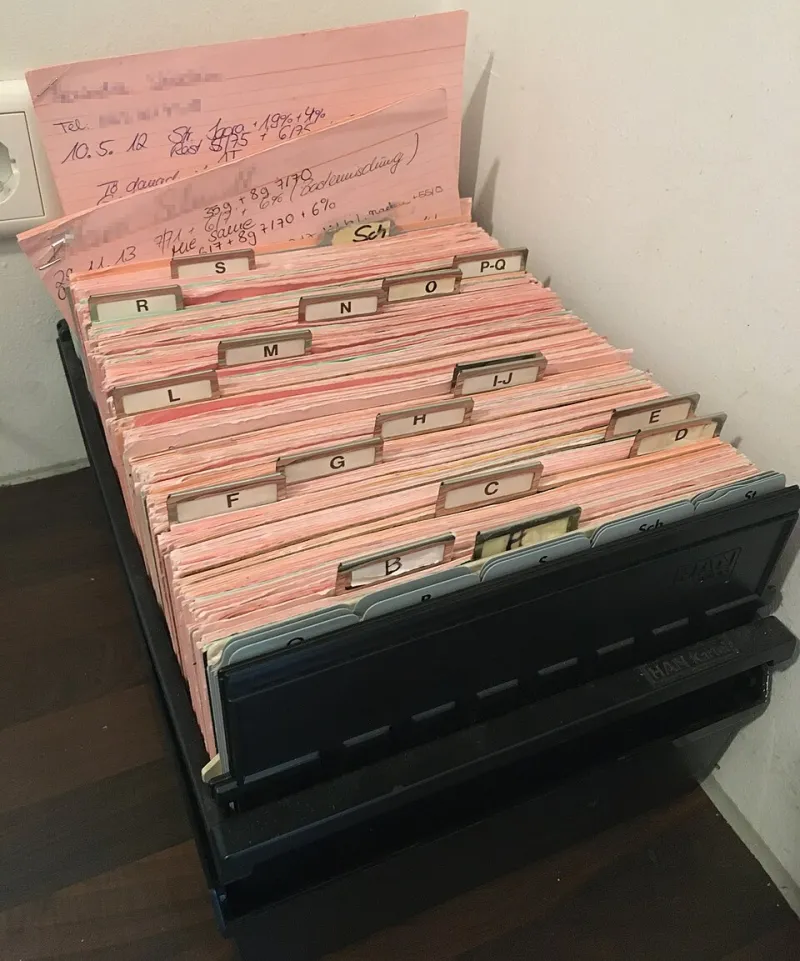
Photo: Pittigrilli, CC BY-SA 4.0, via Wikimedia Commons
You have nine factions in your city, a duke who keeps a grudge calendar, and a party who just insulted the harbormaster in front of forty witnesses. Now what?
The instinct is to open a spreadsheet. Resist it. After three campaigns of watching reputation grids rot in the back of a notebook, I've landed on something smaller and meaner: one index card per faction, five tiers, and a design rule that nobody has to do math after the second round of drinks.
Why Most Reputation Trackers Die in Session Three
The failure is almost never the idea. It's the bookkeeping. Numbers invite precision, precision invites arguments, and arguments at ten o'clock with a half-eaten pizza on the table are how a campaign loses momentum. Players also can't see your spreadsheet, which means the system never reaches the people it's supposed to influence. A reputation mechanic that lives only behind the screen is just you having feelings about the party.
The card fixes both problems. It's small enough to sit on the table, blunt enough that nobody argues about decimals, and visible enough that players start asking where they stand.
Five Tiers, No Numbers
Pick a scale and never touch it again:
- Devoted — they'd take a blade for you.
- Warm — doors open before you knock.
- Neutral — coin for coin, favors for favors.
- Cold — paperwork, surcharges, wrong directions.
- Hostile — your name is on a list somewhere.
That's it. No +2, no zero-to-one-hundred. Five words a player can memorize in one evening, which means the reputation system actually shows up in their decisions instead of only yours.
What Goes on the Card
The front gets four lines:
- Faction name, plus where they operate.
- Current tier, written in pen. Changed in pen, cheerfully, in front of everyone.
- Two levers — the specific deeds that move them up or down.
- One tell — the visible symptom players can read without a roll.
The back gets three or four scratched notes and a date. That's the entire apparatus. It fits in a dice bag.
The levers are the real design work, and they should be concrete and slightly petty. Not "help the guild," but "return seized cargo without asking for a cut." Not "offend the temple," but "make light of the Weeping Saint's vigil." Vague levers turn every interaction into a judgment call; specific ones let players make plans.
The tell is what makes the thing playable. Nobody should need a Perception check to notice that the harbormaster's clerk has stopped offering them tea. Write the tell down and use it every single time the faction appears.
What Each Tier Actually Buys
Reputation that never converts into practical effects is just flavor text. This conversion table has held up across three long campaigns in wildly different settings:
- Devoted: free lodging, loaned gear, a favor called in without being asked, and someone willing to lie to a magistrate for you.
- Warm: a ten-to-twenty percent break on goods and services, introductions to people who don't take walk-ins, and one solid rumor per downtime.
- Neutral: coin for coin. No favors, no hostility, no small talk.
- Cold: a surcharge and a delay on everything, guards who suddenly care about permits, and the maddening experience of being told the person you need is out.
- Hostile: your description circulating, sabotage on the road, and — the good stuff — an old ally who won't quite meet your eyes.
Notice that Cold does most of the work. Few tables ever go fully Hostile, but everybody spends a session or two at Cold, and that's where the system earns its keep.
Updating It During Play
Four rules keep the card honest.
One notch per session, per faction. No matter how much chaos the party caused, a faction moves at most one tier in a night. Escalation feels earned this way, and nobody becomes a legend of the docks after a single good deed.
Deeds travel at the speed of gossip. Factions that weren't in the room hear about it later. I delay their update by one session, which also hands me a free way to open the next game: a letter, a rumor, a stranger who knows too much.
Group deeds move the group. If one character burns a bridge quietly and alone, run it as a personal grudge and leave the card alone. Card-level reputation is for things that got witnessed.
Let it cool. A Warm or Devoted faction that goes three or four in-game months without contact drops a tier. Attention is a currency, and factions notice when it stops.
A Filled-In Example
Harbormaster's Office — the docks, the weigh-house, every crane in the city
Tier: Cold
Levers: up — return seized cargo intact; down — smuggle through the north gate
Tell: the clerk writes your names down before you finish speaking
Back: Session 14, paid the fine loudly. Session 15, tipped the night watch.
Nothing there requires arithmetic. Anyone at the table can read it, and everyone instantly understands how much trouble they're in.
When to Break Your Own Rules
Once or twice a campaign, someone does something enormous and the one-notch rule gets in the way of a better story. Break it. Move the faction two tiers, and say out loud that the city will be talking about this for years. The point of the card was never consistency for its own sake — it's keeping reputation in the room, where the whole table can feel it.